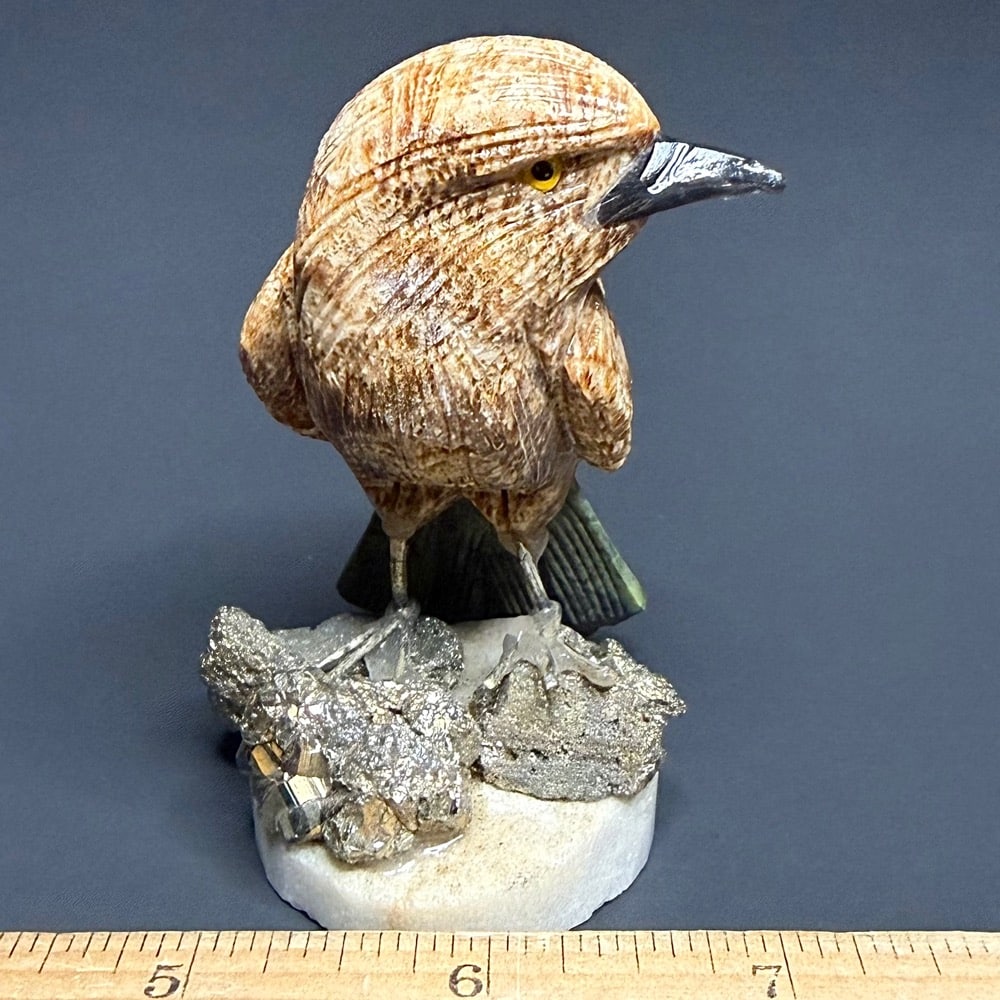
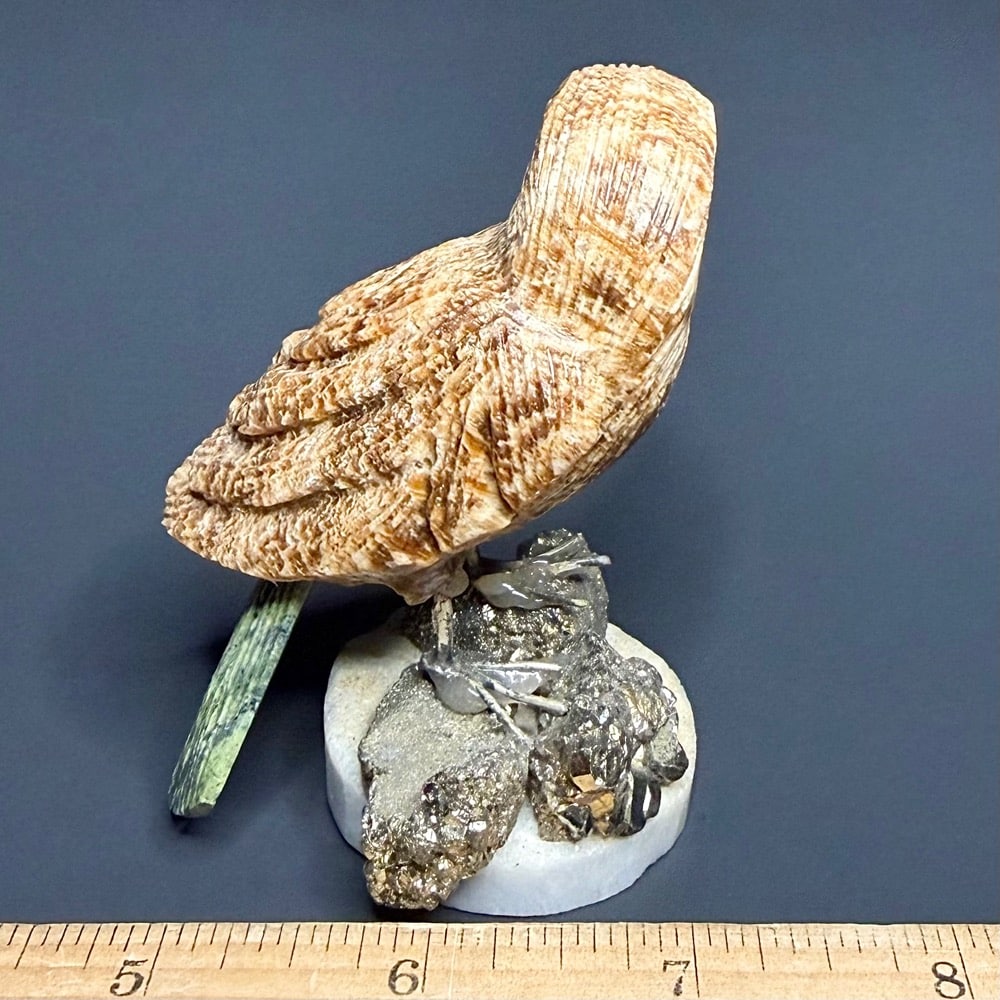
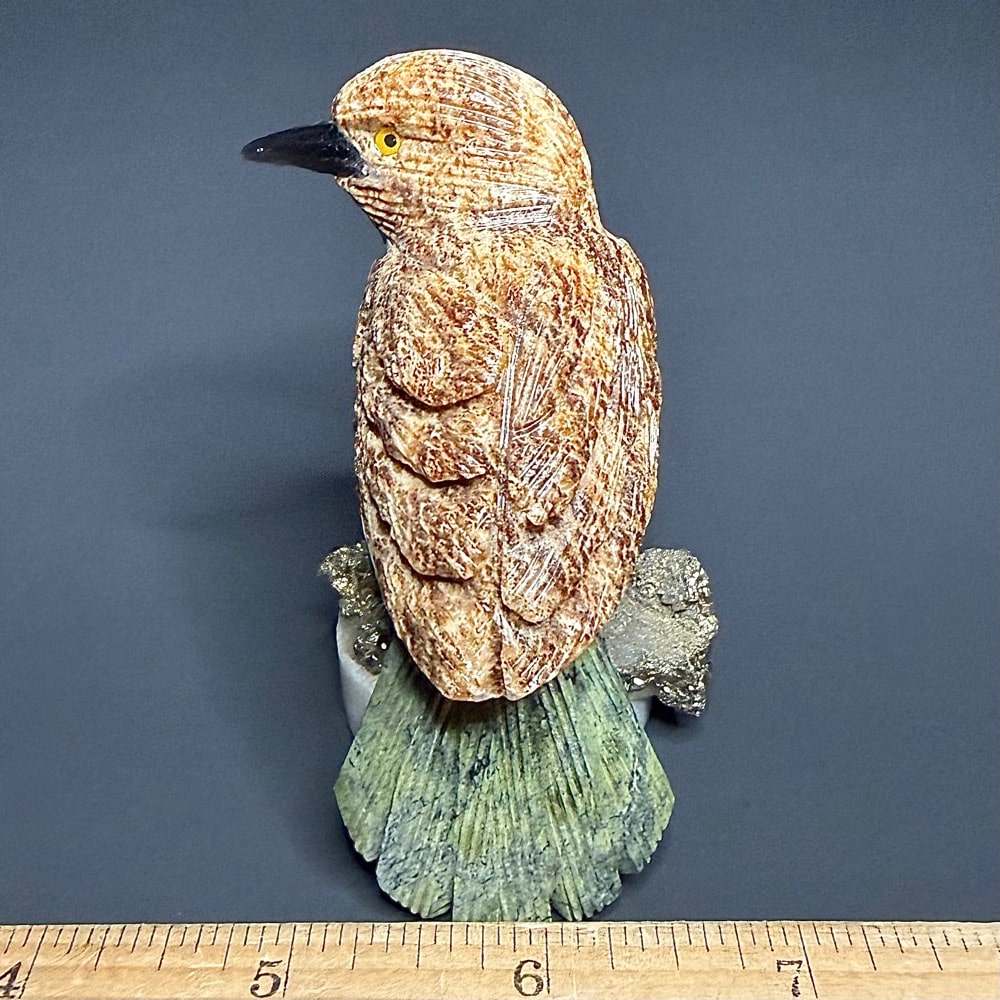
Description
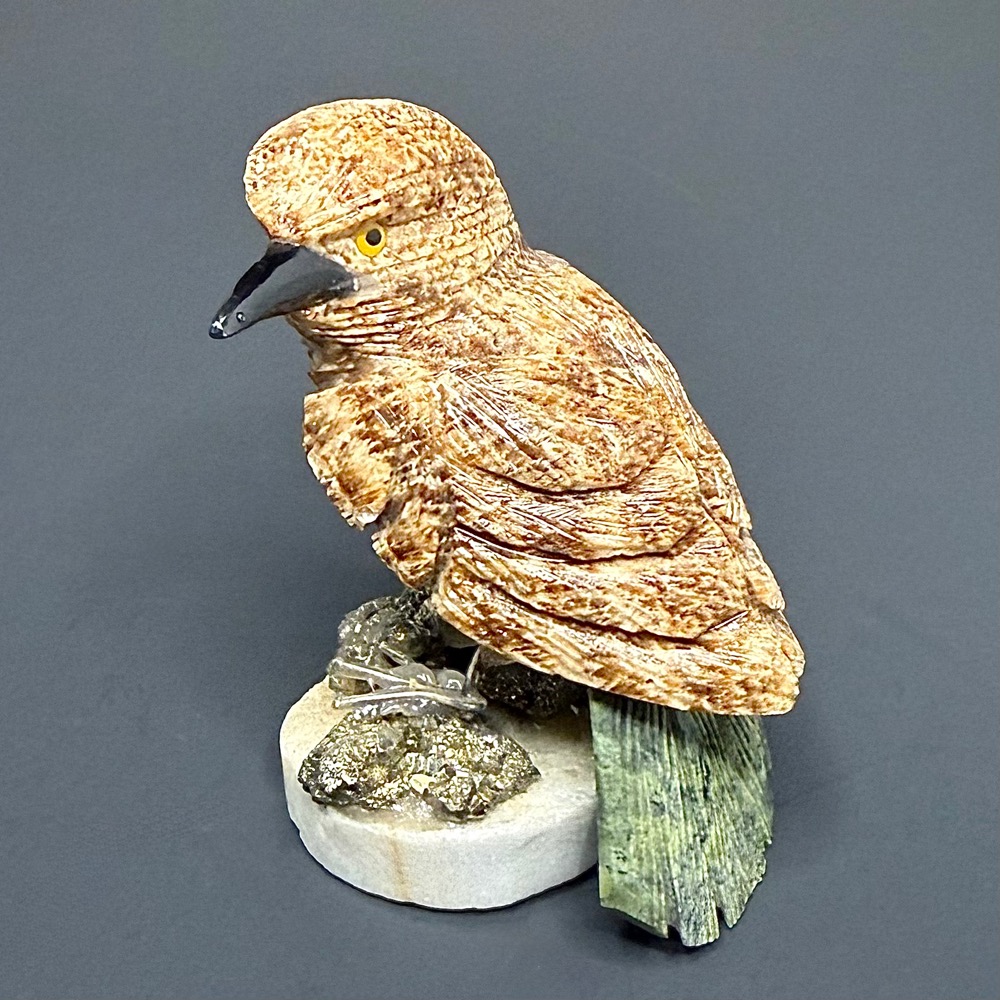
Aragonite is a Carbonate mineral that can occur in conjunction with Calcium Carbonates. Aragonite differs from Calcite in the formation of the Crystal shapes which can be in lattice, crystal, columnar or fibrous in many different designs, shapes and sizes. Aragonite will form in mollusk shells, oceans and saltwater caves as inorganic precipitates called marine cements and speleotherms. Ammolite is a form of Aragonite with impurities that make it iridescent and valuable as a gemstone.
Serpentine is a group of common rock forming hydrous Magnesium Iron Silicate minerals. It can contain minor amounts of Chromium, Manganese, Cobalt or Nickel. Serpentine may refer to over 20 different varieties that belong to the Serpentine group and the most common are Antigorite, Chrysotile and Lizardite. The color is often green and may have a mottled or scaly appearance.
Pyrite, or Iron Pyrite, is an Iron sulfide with isometric Crystals that usually appear as cubes. It is brittle and can break or powder easily. Its metallic luster and brass yellow hue have earned it the nickname of “fool’s gold” due to many miners mistaken it for the real thing. Ironically, small quantities of actual gold are sometimes found in Pyrite. It is the most common of the sulfide minerals and is usually found with other sulfides or oxides in Quartz veins, sedimentary or metamorphic rocks.