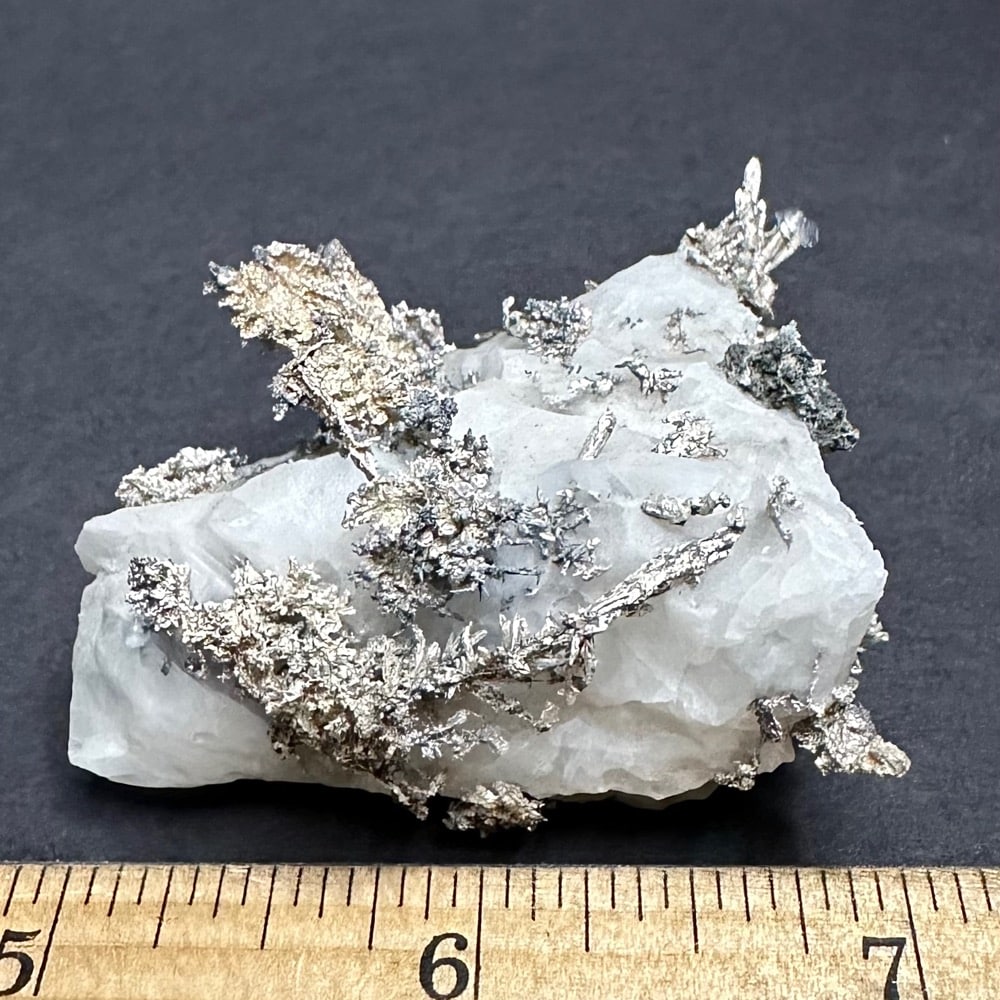
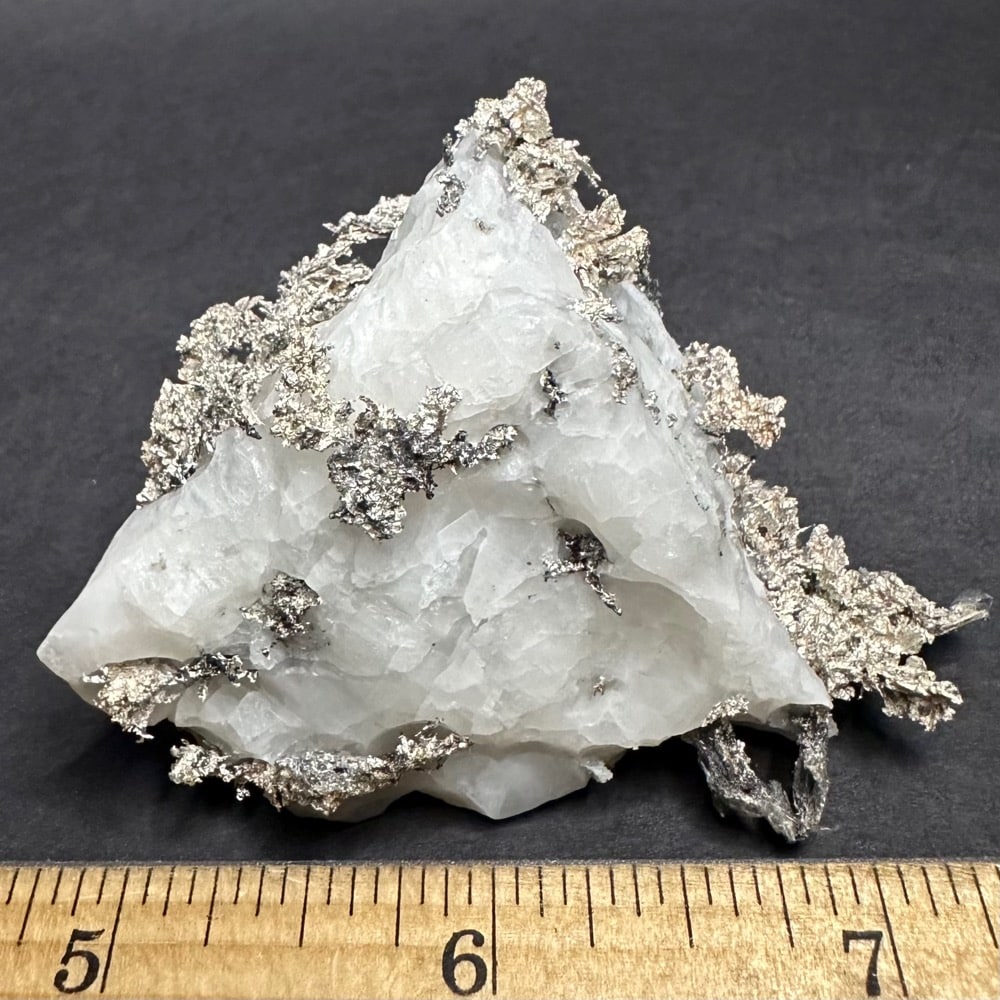
Description
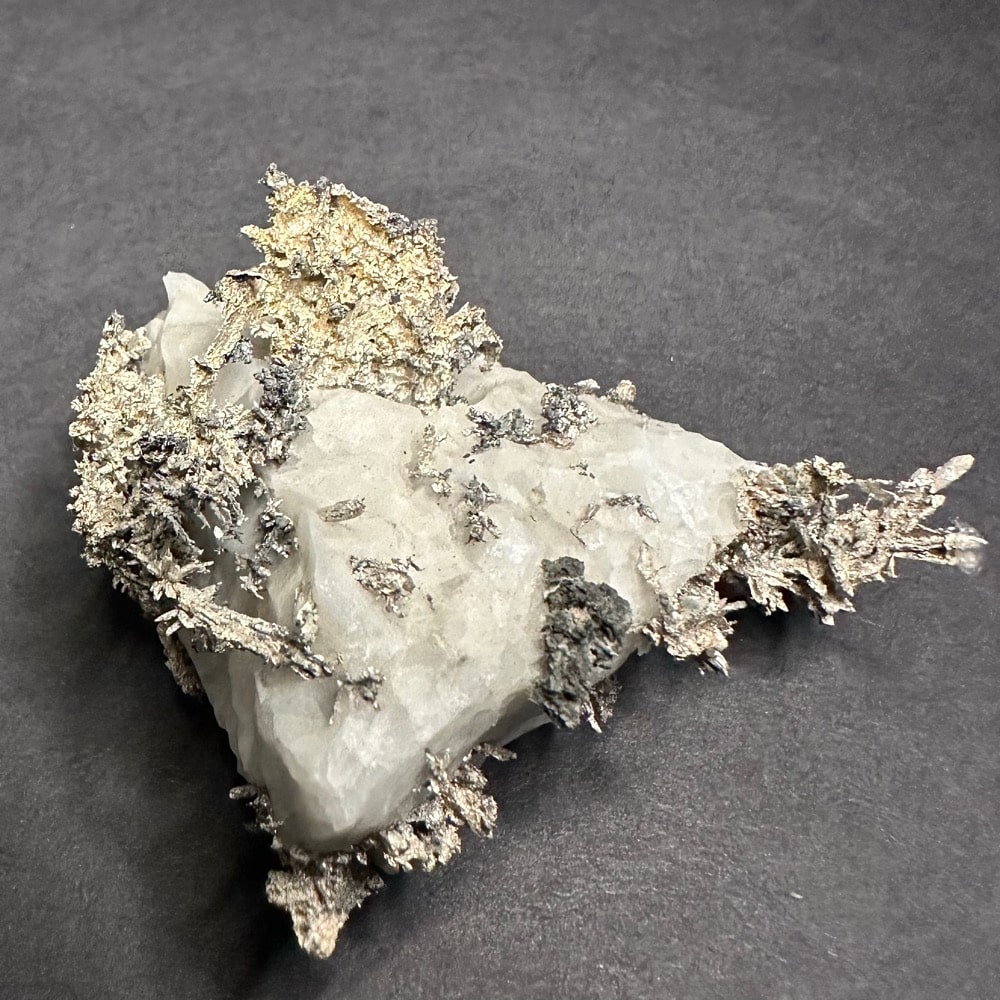
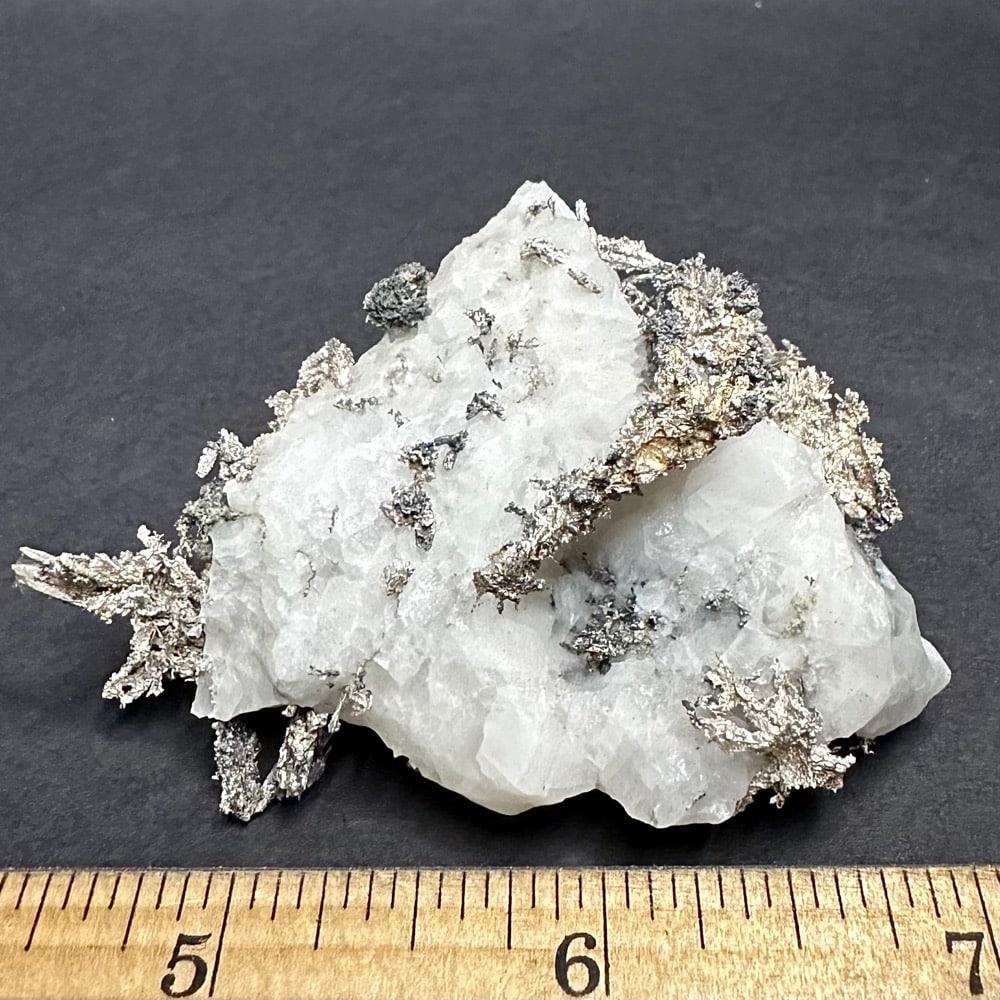
Acanthite is a common silver mineral in moderately low-temperature hydrothermal veins and in zones of supergene enrichment. It occurs in association with native silver, pyrargyrite, proustite, polybasite, stephanite, aguilarite, galena, chalcopyrite, sphalerite, calcite and quartz.
Acanthite was first described in 1855 for an occurrence in the Jáchymov (St Joachimsthal) District, Krušné Hory Mts (Erzgebirge), Karlovy Vary Region, Bohemia, Czech Republic. The name is from the Greek “akantha” meaning thorn or arrow, in reference to its crystal shape.
Dyscrasite is a silver antimonide. It forms orthorhombic, opaque, metallic, silver-white, prismatic to platy, striated crystals with pyramidal terminations; also as granular, foliated, or massive. It occurs as a primary mineral in silver ore deposits.
Calcite is a Carbonate mineral that is most widely distributed on the Earth’s surface. It is a common constituent of sedimentary rocks with Limestone in particular. A Calcite formation can take on many different shapes and sizes which is dependent on the location, ground water occurrence and temperature. Calcite is usually white or colorless but can be gray, red, yellow, green, blue, violet, brown or black. The deeper the color is usually indicative of the definitive impurities from the earth or water.