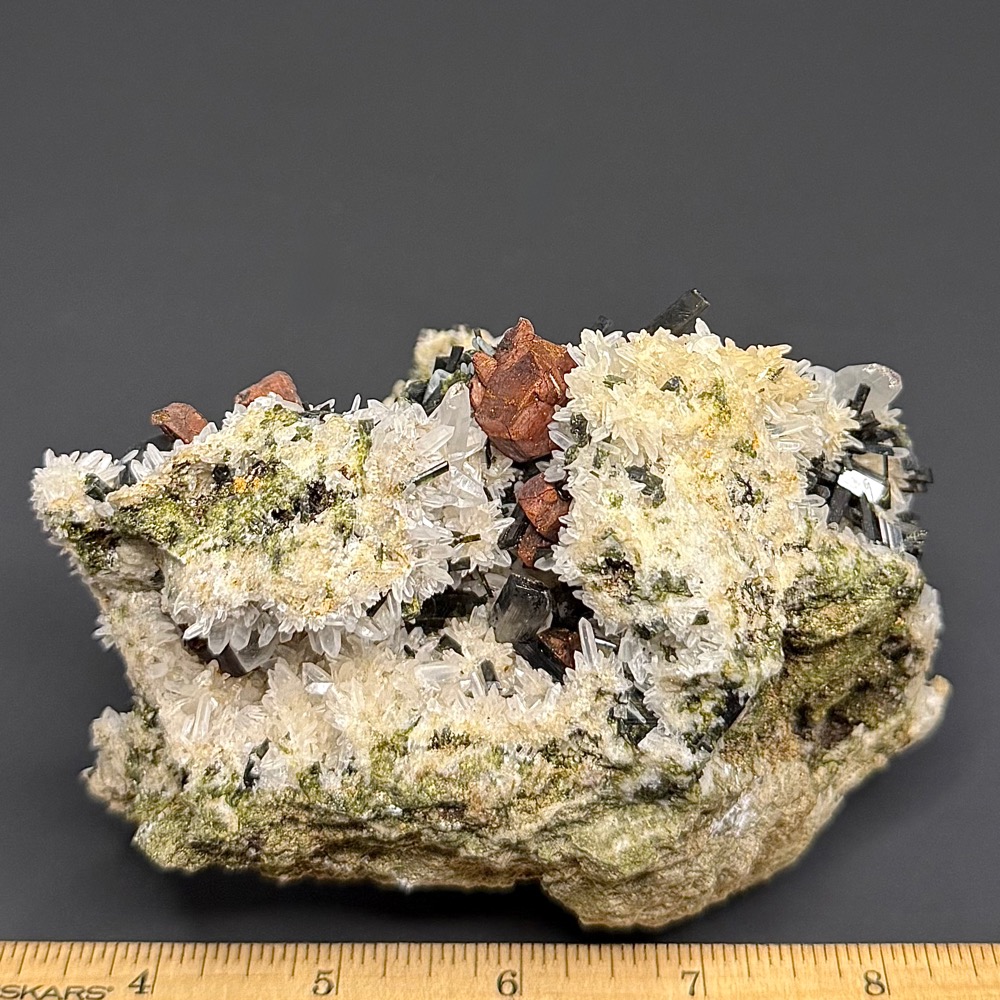
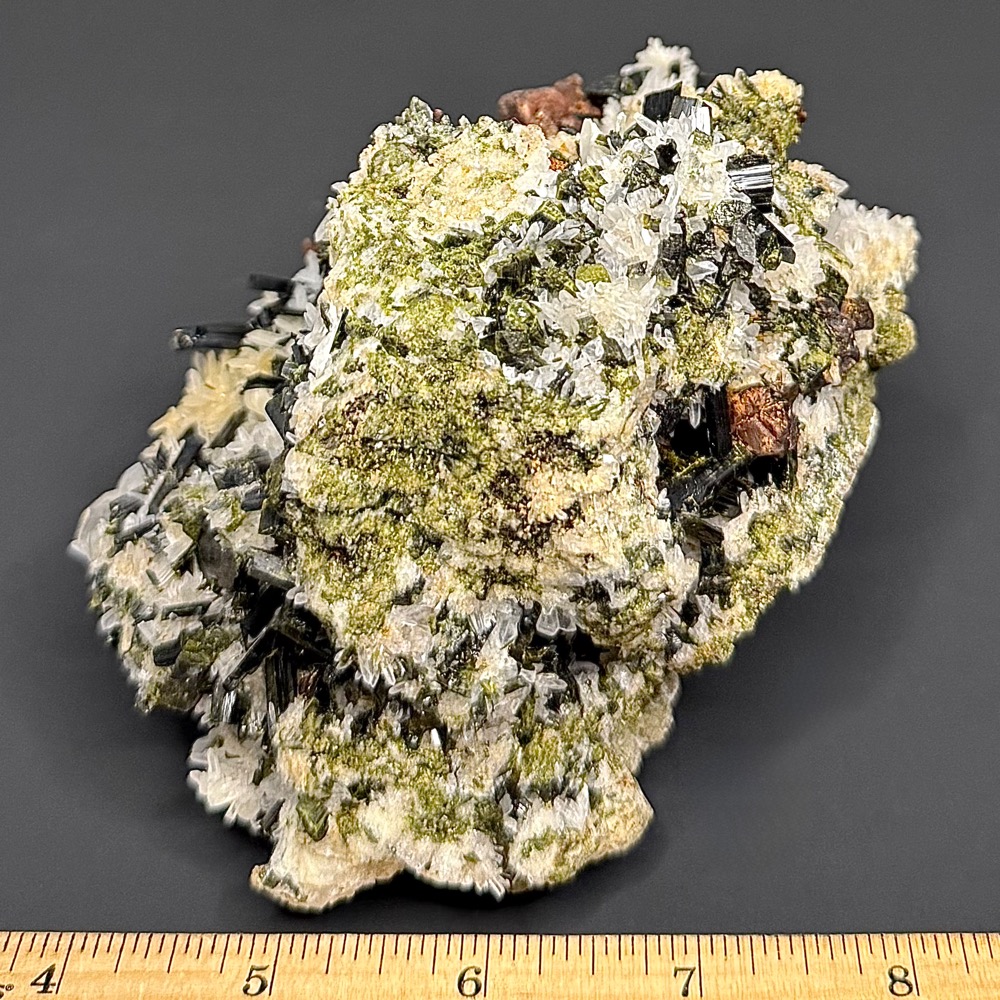
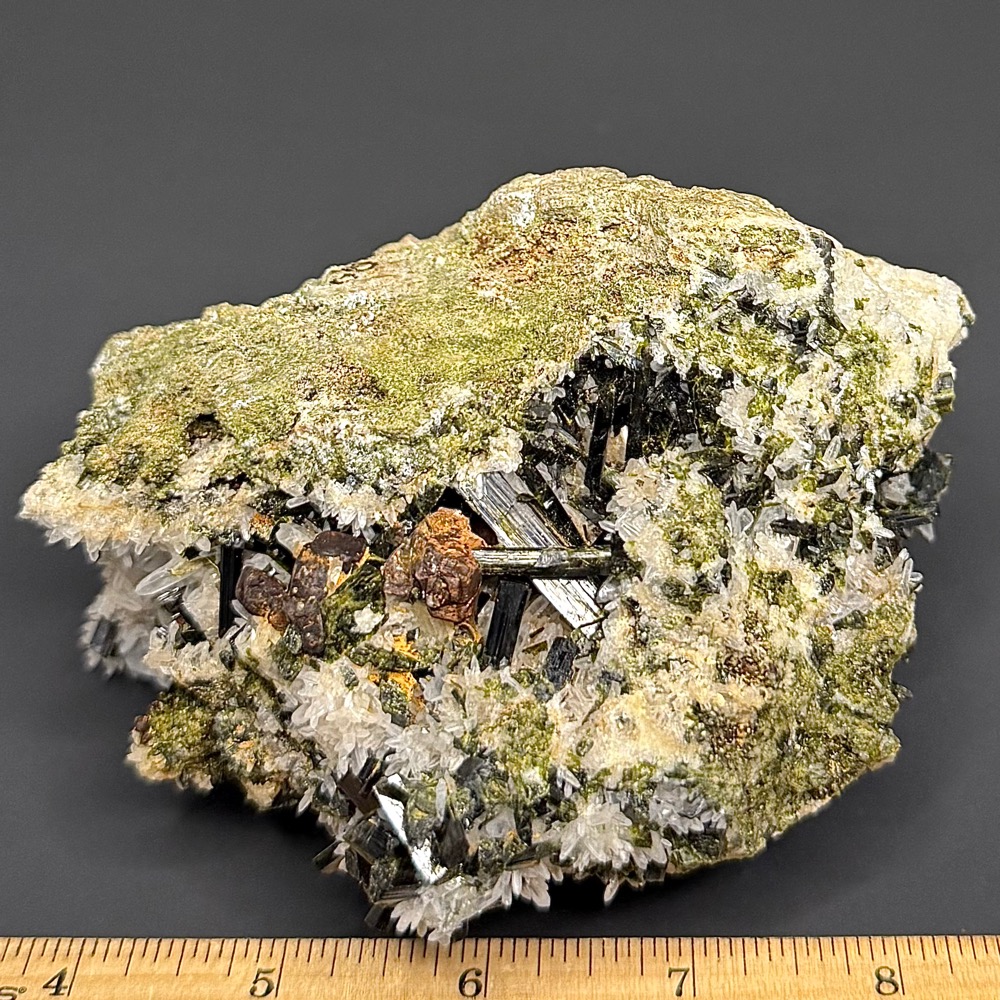
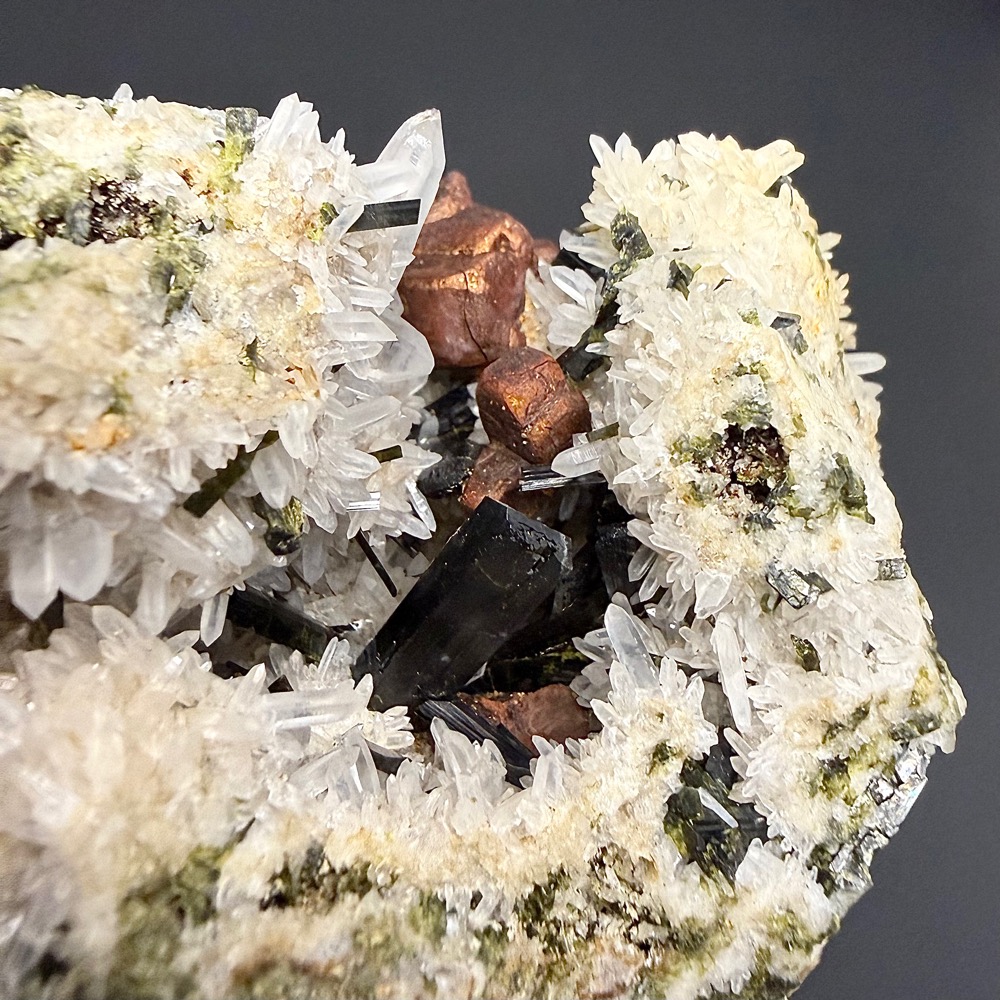
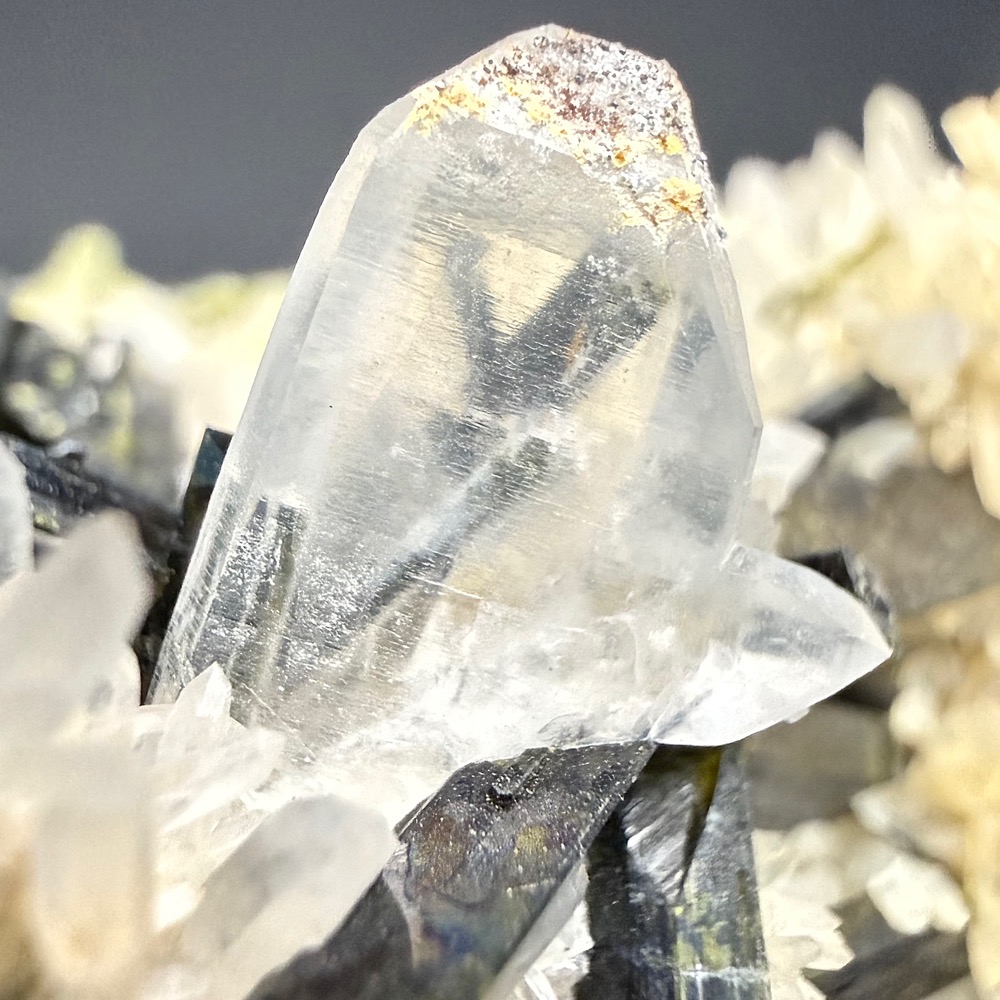
Description
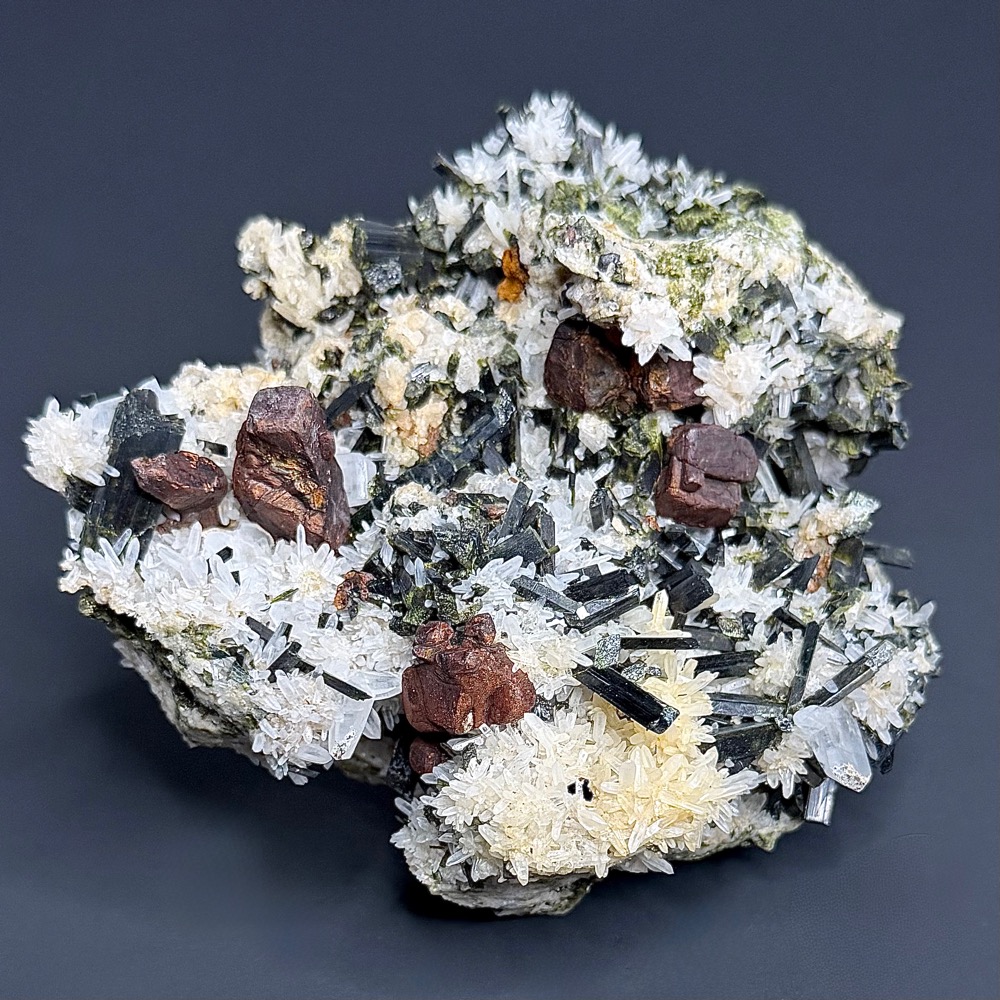
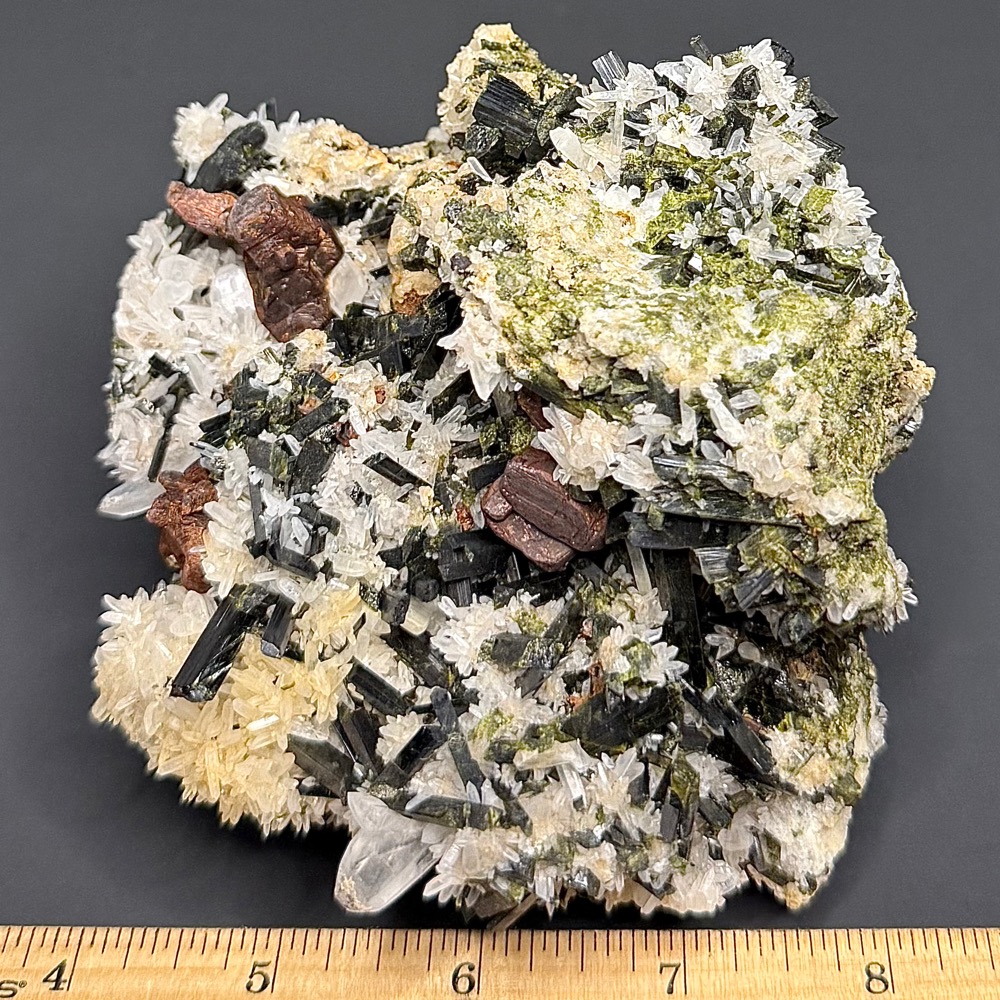
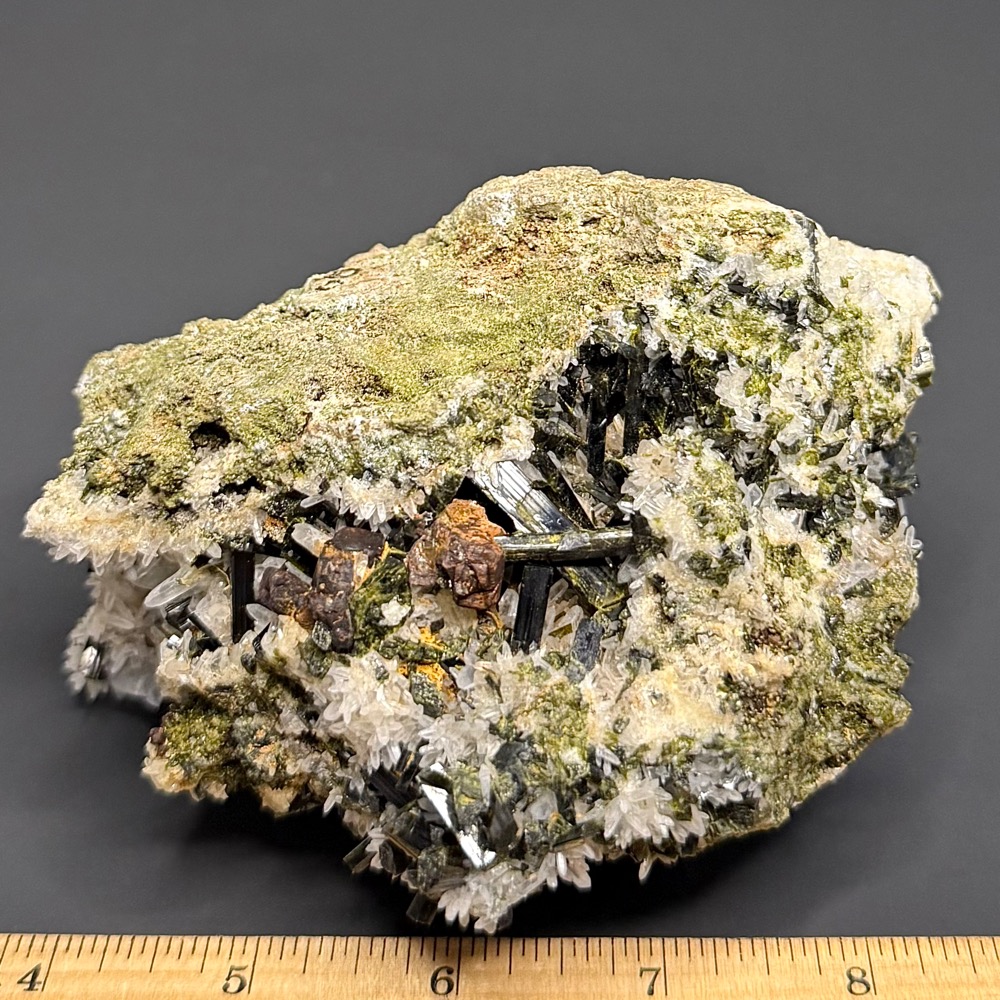
Epidote is an abundant rock-forming mineral, but one of the secondary origin. Many of the characters of the mineral vary with the amount of iron present. Prismatic, columnar crystals, often shiny, finely striated faces. The color is green, gray, brown or nearly black but usually a characteristic shade of yellowish-green or pistachio green.
Quartz is the second most common mineral in the Earth’s continental crust. It is mainly composed of Silica or Silica based minerals. Although Quartz is known by a variety of names, the most important distinction between types of Quartz is that of macro-crystalline, individual crystals visible to the unaided eye, and micro-crystalline, where aggregates of crystals are only visible under high magnification. There are many forms of Quartz including Chalcedony, Amethyst, Citrine, and Carnelian which are results of mineral impurities or heat treatments.
Pyrite, or Iron Pyrite, is an Iron sulfide with isometric Crystals that usually appear as cubes. It is brittle and can break or powder easily. Its metallic luster and brass yellow hue have earned it the nickname of “fool’s gold” due to many miners mistaken it for the real thing. Ironically, small quantities of actual gold are sometimes found in Pyrite. It is the most common of the sulfide minerals and is usually found with other sulfides or oxides in Quartz veins, sedimentary or metamorphic rocks.